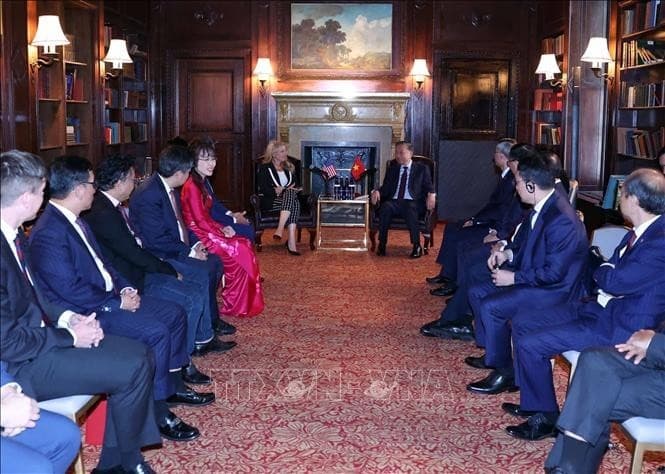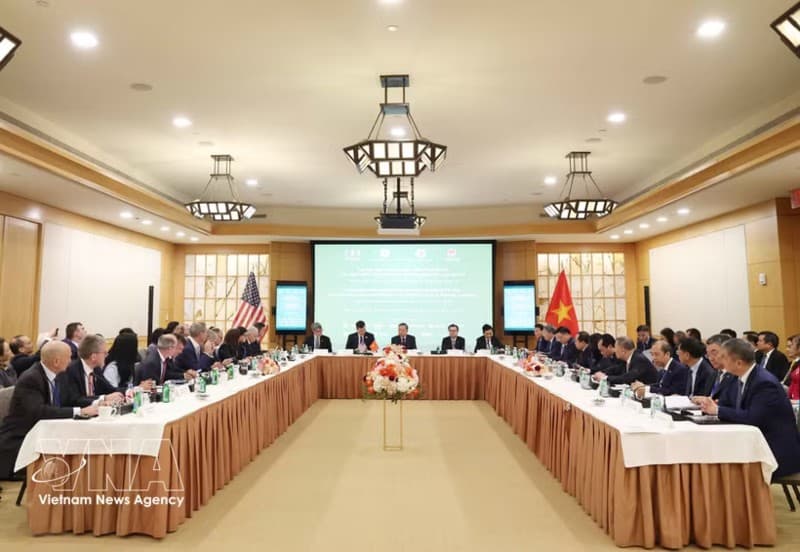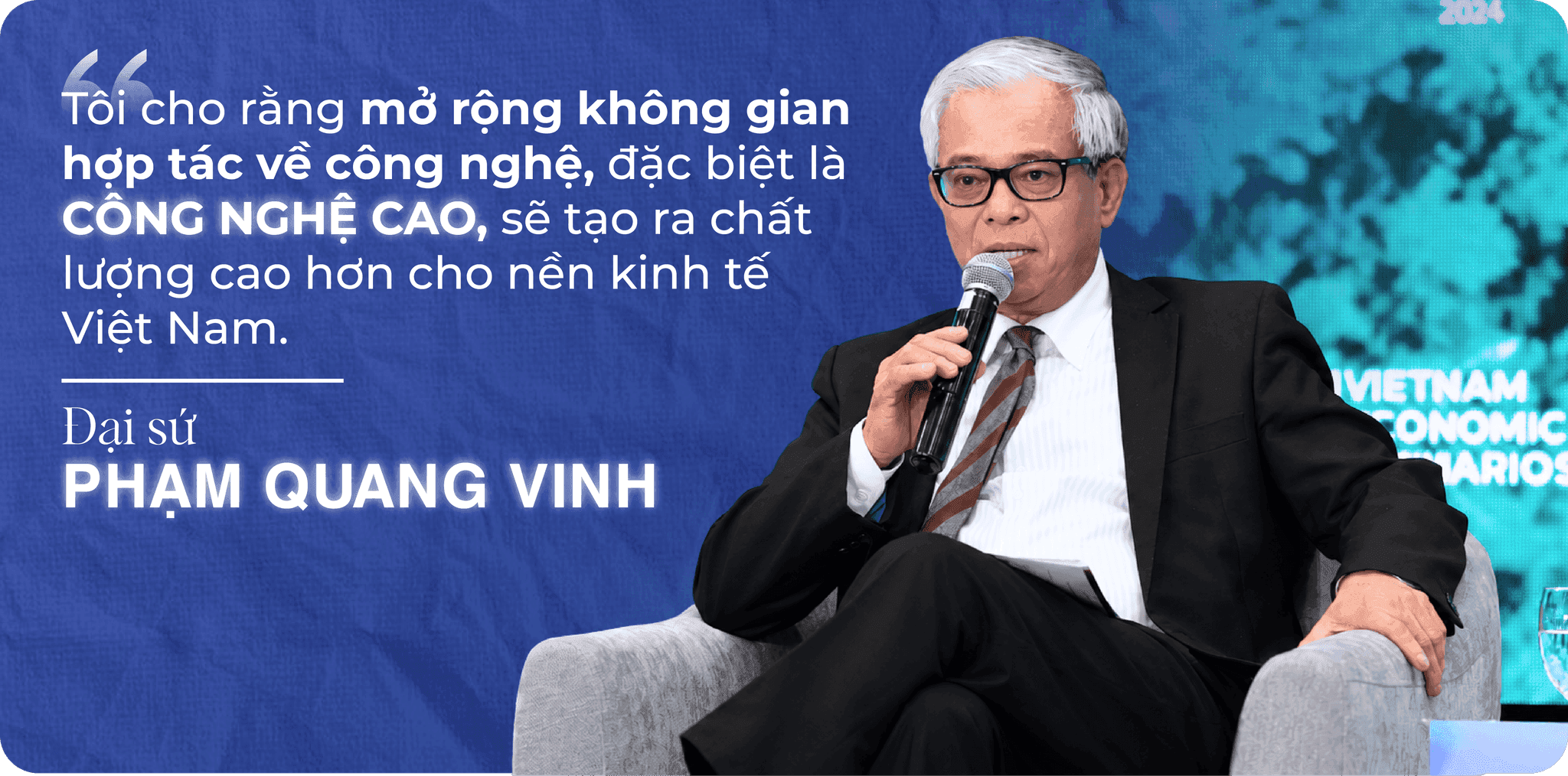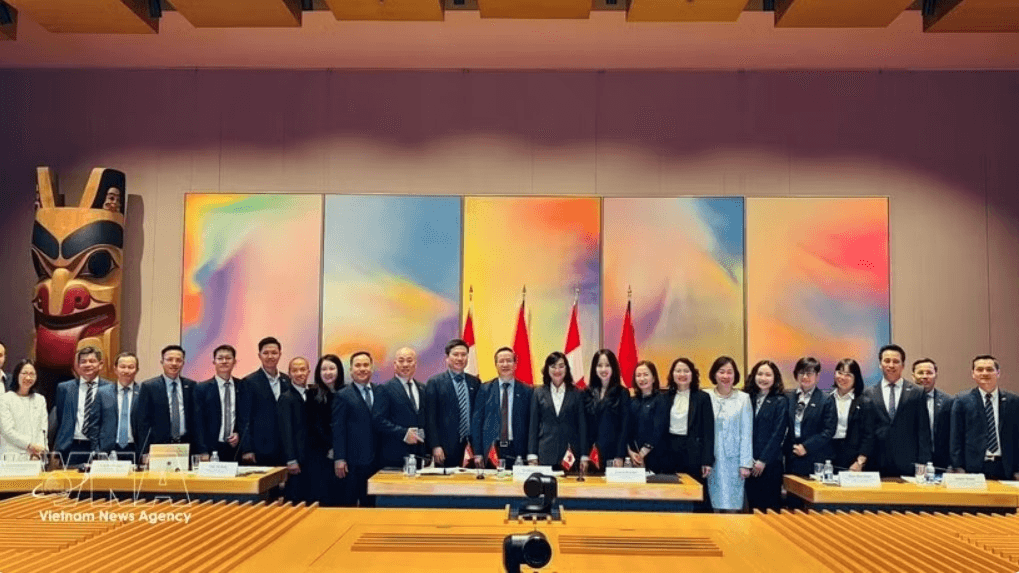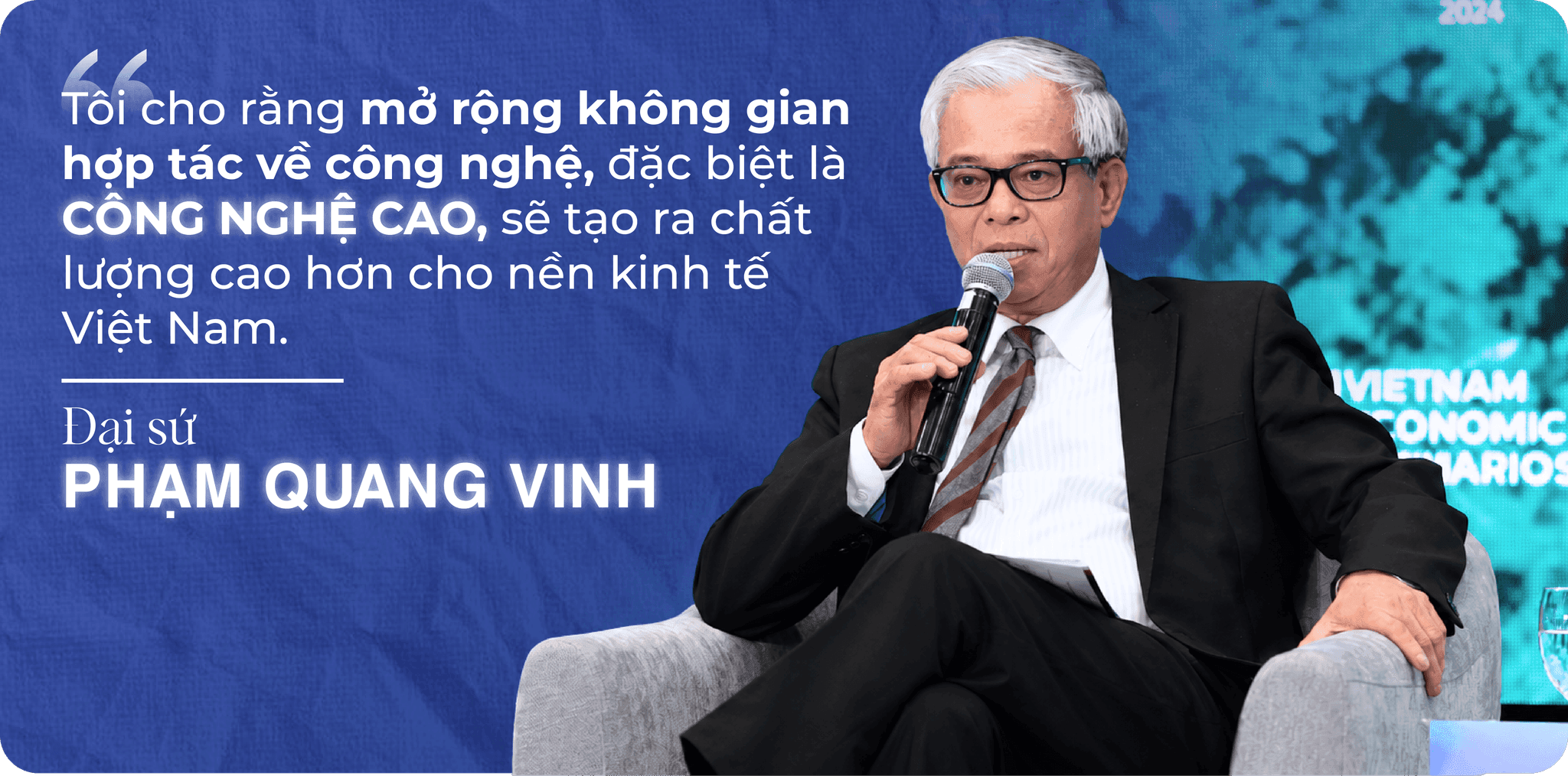
Against the backdrop of heightened global economic and geopolitical volatility, Vietnam must continue strengthening its endogenous capacity while deepening relations with pivotal partners, diversifying markets and supply chains, and more effectively capitalizing on free trade agreements (FTAs). Speaking with us, Ambassador Pham Quang Vinh noted that this strategic approach will allow Vietnam to expand its development space, bolster resilience against external macroeconomic shocks, and capture new growth drivers stemming from science, technology, innovation, and digital and green transitions.
VIETNAM HAS SET HIGHER TARGETS FOR FOREIGN AFFAIRS AND INTERNATIONAL INTERGRATION
From both diplomatic and economic perspectives, what are Vietnam’s primary objectives during this working visit to the United States and the state visit to Canada?
First and foremost, this working visit by the General Secretary and State President carries profound significance, particularly as Vietnam has successfully concluded the 14th National Party Congress and entered a new developmental era. During this phase, Vietnam has laid down a series of strategic resolutions delineating its forthcoming path of economic development and international integration.
These resolutions heavily emphasize economic development, institutional reform, and a transition toward higher-quality, more sustainable growth driven by innovation, science, and technology. These elements are identified as vital catalysts enabling Vietnam to enter a new stage of development in both quantitative and qualitative terms.
Concurrently, other resolutions govern international integration and foreign policy. Vietnam remains steadfast in its foreign policy of independence, self-reliance, diversification, and multilateralization—positioning itself as a reliable partner and responsible member of the international community.
In this new era, Vietnam has set more ambitious objectives for foreign affairs and integration. The country proactively fosters an environment conducive to peace and domestic development, creating new economic space and growth drivers. Simultaneously, it actively contributes to global public goods, particularly in safeguarding peace, upholding international law, and advancing global governance—including emerging domains such as technology governance and artificial intelligence. Consequently, this mission is anchored in three clear expectations:
- Projecting Vietnam's new national vision and development strategy in this new era.
- Approaching international integration with renewed posture, enhanced capabilities, and elevated standing—leveraging external resources for domestic development while contributing constructively to the international community.
- Deepening bilateral and multilateral ties to unlock additional developmental space and economic resources.
Amid shifting global economic and geopolitical dynamics, how does the participation and address of General Secretary and State President To Lam at the High-Level General Debate of the UN General Assembly reinforce Vietnam’s international standing?
Vietnam continues to project its stature as a proactive and responsible actor in international cooperation, advocating for international law, the UN Charter, peace, development, and mutual collaboration.
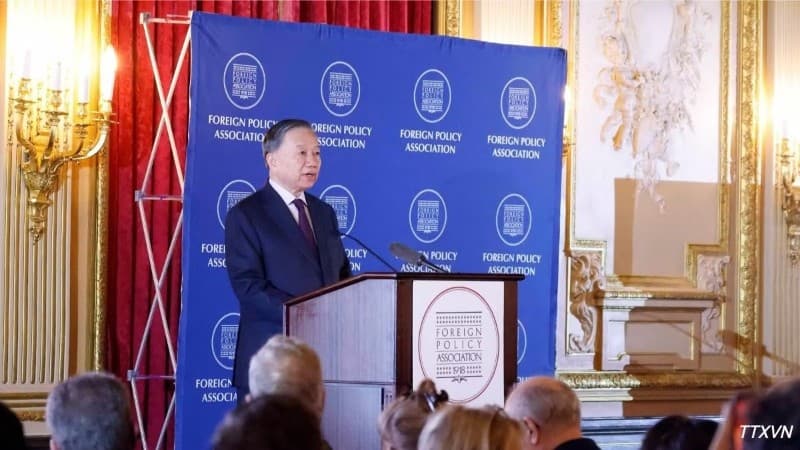
Viewed through that prism, the address delivered by the General Secretary and State President at the UN General Assembly clearly underscored key global priorities.
A primary imperative is the restoration and cultivation of strategic trust in international relations. Achieving this necessitates managing bilateral differences and advancing mutually beneficial cooperation anchored in international law and the UN Charter.
Second, the international community must leverage science, technology, and innovation to drive economic development.
Third, we must construct a global architecture where all sovereign states actively contribute to addressing shared transnational challenges, such as pandemics, climate change, water resource management, and the governance of frontier technologies.
Alongside multilateral engagements at the United Nations, the itinerary includes extensive bilateral activities, notably meetings with senior US officials and policy exchanges on US–Vietnam relations. The General Secretary and State President will also engage numerous foreign heads of state to consolidate bilateral partnerships and operationalize Vietnam's latest foreign and economic policy guidelines.
Collectively, these engagements showcase a Vietnam entering a new era with greater confidence, autonomy, proactivity, and commitment to international integration.
This mission occurs following the elevation of US–Vietnam bilateral ties to a Comprehensive Strategic Partnership. In your view, in which areas must both sides translate "political commitments" into concrete economic outcomes?
Regarding US–Vietnam relations, a salient theme in the address delivered by the General Secretary and State President at the Council on Foreign Relations was the reflection on the bilateral trajectory. Moving from former adversaries to partners, and currently to a Comprehensive Strategic Partnership, offers instructive lessons:
- Both parties must transcend historical divergences and advance bilateral ties on the foundation of mutual respect.
- They must broaden and deepen mutually beneficial cooperation, particularly in commerce, cross-border investment, science, and technology.
- Both sides must continue addressing war legacies and post-war remediation—an enduring pillar of the bilateral dynamic.
Transcending the past to forge a future grounded in mutual trust and reciprocal benefit established the foundation for this relationship's elevation to a Comprehensive Strategic Partnership.
Building upon this, both nations must deepen and expand this partnership. Several focal areas require prioritization to generate tangible deliverables and structural breakthroughs:
First, sustained momentum must be maintained across established domains of cooperation: politics, diplomacy, trade, foreign direct investment, science, technology, education, war legacy remediation, and multilateral coordination.
Crucially, bilateral cooperation in science, technology, and innovation demands elevated focus. Both Vietnam and the US recognize this as the cornerstone of the Comprehensive Strategic Partnership. Vietnam views science, technology, and innovation as essential engines of sustained growth. Initial frameworks are in place: the US has supported human capital development, while American multinational corporations are exploring partnerships in technology and innovation within Vietnam. Nonetheless, these initiatives must accelerate, particularly given the rapid pace of global technological transformation.
Second, bilateral trade and investment must be elevated to higher-value segments. Both governments continue bilateral dialogues to eliminate trade barriers and negotiate new commercial arrangements that foster reciprocal economic gains.
Fundamentally, the US and Vietnamese economies exhibit strong structural complementarities. Vietnam exports consumer and industrial goods demanded by the US market, largely avoiding direct competition with US domestic manufacturing. Conversely, Vietnam requires the advanced capital goods, high technology, and foreign direct investment in which the US commands a comparative advantage. Consequently, both sides must accelerate investment and technological partnerships while facilitating an enabling business environment for US firms operating in Vietnam.
Taking a broader strategic perspective, Vietnam values bilateral ties with the US for reciprocal gains while nesting the relationship within a wider regional architecture. Beyond bilateral channels, the two nations can coordinate across regional and multilateral platforms, including the Mekong sub-regional frameworks, ASEAN, the United Nations, and other international forums.
Scaled appropriately, US–Vietnam economic connectivity can serve as an anchor bridging the US with Southeast Asia and ASEAN. This represents vast economic potential, particularly given US investment priorities in advanced technologies, matched by the strategic focus placed on high-tech sectors by ASEAN economies such as Vietnam, Malaysia, Singapore, and Thailand.
Furthermore, issues such as water security governance, Mekong sub-regional cooperation, and the preservation of maritime and aerial freedom of navigation under international law—notably the United Nations Convention on the Law of the Sea (UNCLOS)—provide viable avenues for continued coordination among Vietnam, the US, and ASEAN partners.
If you were to identify the specific sectors capable of delivering the most substantive breakthroughs in current US–Vietnam economic ties, which would you highlight?
I view science, technology, and innovation as the sectors uniquely positioned to generate critical new growth dynamics.
This holds true not merely because of US technological leadership, but because Vietnam is actively upgrading its macroeconomic structure toward a knowledge-based, innovation-led economy with higher domestic value added.
Deepening bilateral cooperation in high technology allows Vietnam to attract foreign direct investment while facilitating the acquisition, licensing, and cross-border transfer of proprietary US technologies and know-how. This transmission mechanism directly enhances domestic productivity. Naturally, achieving this requires sustained dialogue between both public sectors and business communities, alongside concerted efforts by US authorities to lower regulatory barriers governing technology transfers to Vietnam.
While the US remains Vietnam's largest export destination, the bilateral trade balance exhibits a substantial surplus in Vietnam’s favor. How can Vietnam expand imports from the US to directly support its domestic economic upgrading—such as capital machinery, advanced technology, energy, and intermediate inputs?
This issue requires examination through two lenses:
First, the structural complementarity of the two economies. Vietnam exports goods that correspond directly to end-consumer and intermediate demand in the US market. The bilateral trade balance is governed by consumer demand, purchasing power, and Vietnam's capacity to supply price-competitive goods meeting stringent market standards. Vietnam’s export expansion to the US reflects these market fundamentals.
Second, Vietnam consistently prioritizes adherence to international trade rules and multilateral norms, taking an uncompromising stance against trade fraud, including illicit transshipment and fraudulent rules-of-origin claims.
Both administrations remain engaged in trade dialogues to foster more balanced, sustainable trade flows. The Vietnamese negotiating team will continue working with US counterparts to achieve mutually advantageous agreements that preserve stability and deepen economic, commercial, and investment ties.
Concurrently, Vietnam must promote technological cooperation, including inbound investment and technology transfer from the United States. Advancing this framework will expand Vietnam’s capacity to procure high-tech capital goods, advanced technological solutions, and innovation assets from the US—representing a critical domain of economic cooperation.
Vietnam has proactively scaled up imports of US energy products, commercial aircraft, high-tech equipment, and agricultural commodities within its macroeconomic means. Expanding the scope of cooperation in high technology will directly upgrade the sophistication of the domestic economy, creating favorable structural conditions for Vietnam to attract US capital while assimilating American technological innovations.
Bilateral trade relations must balance market complementarity with stringent adherence to multilateral trade rules and origin compliance. Vietnam remains committed to both imperatives.
Amid escalating geotechnological competition, export controls, and economic security mandates, how is Vietnam’s role evolving within the strategic calculations of US corporations?
The core imperative for Vietnam is to consistently augment its economic competitiveness and domestic productivity, as these constitute the baseline prerequisites for deeper integration into global value chains (GVCs).
Amid heightened geotechnological competition and economic fragmentation, multinational firms increasingly prioritize supply-chain stability, systemic resilience, and operational reliability. Consequently, if Vietnam strengthens its structural fundamentals—labor force skills, technological absorption capacity, and logistics infrastructure—its strategic position within global value chains will expand.
Vietnam must also locate its bilateral relationship with the US within a wider network of relations with other major global economic centers, rather than viewing bilateral partnerships in isolation.
In an increasingly fragmented global economy and geopolitical landscape, how does economic diversification enhance Vietnam's macro-resilience against external shocks?
Diversification is an imperative. Strategic competition among major powers, public health crises, and geopolitical flashpoints have repeatedly precipitated systemic disruptions across global trade and supply chains.
Vietnam maintains a defined policy stance: despite intensifying major-power competition, the country avoids alignment politics and zero-sum polarization. We seek proactive economic partnerships with all major global economic poles, including the United States, China, Japan, the Republic of Korea, the European Union, and other key trading partners.
To mitigate negative external spillovers and macroeconomic headwinds, Vietnam must implement several coordinated policy measures:
- Enhance domestic productive capacity and macroeconomic resilience. Recent global volatility—from systemic crises in Europe and the Middle East to the pandemic—demonstrates that sovereign economic resilience is paramount.
- Capitalize on export markets, strategic partnerships, and supply chains anchored to core economic partners, including both the United States and China.
- Diversify export destinations and global supply linkages. Vietnam has steadily expanded beyond traditional markets, strengthening ties with Australia, India, Russia, and the Republic of Korea, while actively exploring emerging opportunities across Latin America, the Middle East, and Africa.
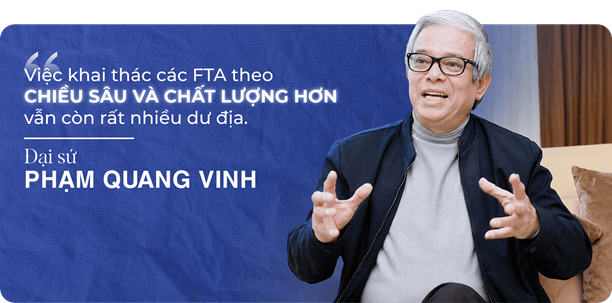
- Optimize the utilization of Free Trade Agreements (FTAs). Having entered roughly 17 bilateral and multilateral FTAs, Vietnam has leveraged these instruments to drive export-led growth and trade diversification.
Substantial scope remains to exploit these FTAs more qualitatively and comprehensively. Vietnam must fully operationalize these treaty commitments to ascend into higher-value-added, structurally resilient segments of global value chains.
Strengthening macroeconomic fundamentals, preserving cooperation with major powers, broadening foreign partnerships, diversifying export markets, and maximizing the depth of FTA implementation remain crucial strategic priorities. The ultimate objective is to bolster economic resilience, broaden development space, mobilize new growth drivers, and integrate Vietnam deeper into sustainable, high-value-added global supply chains.