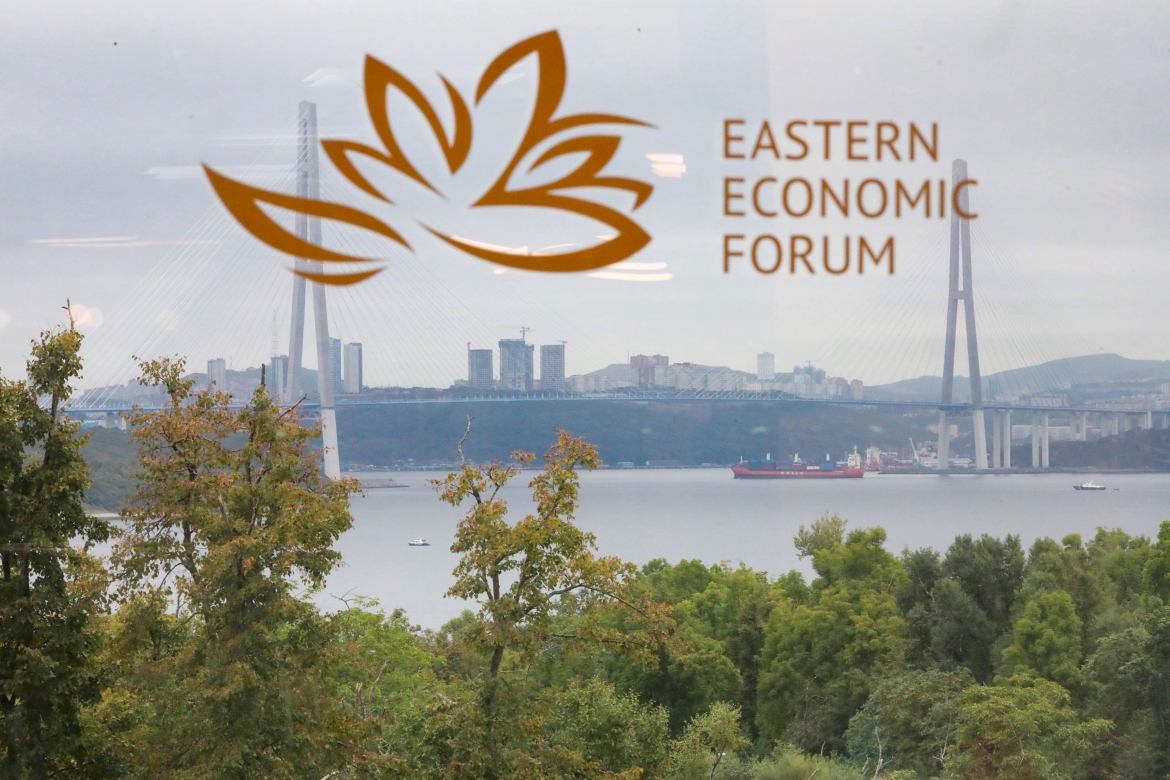
Focus on goals that benefit the people
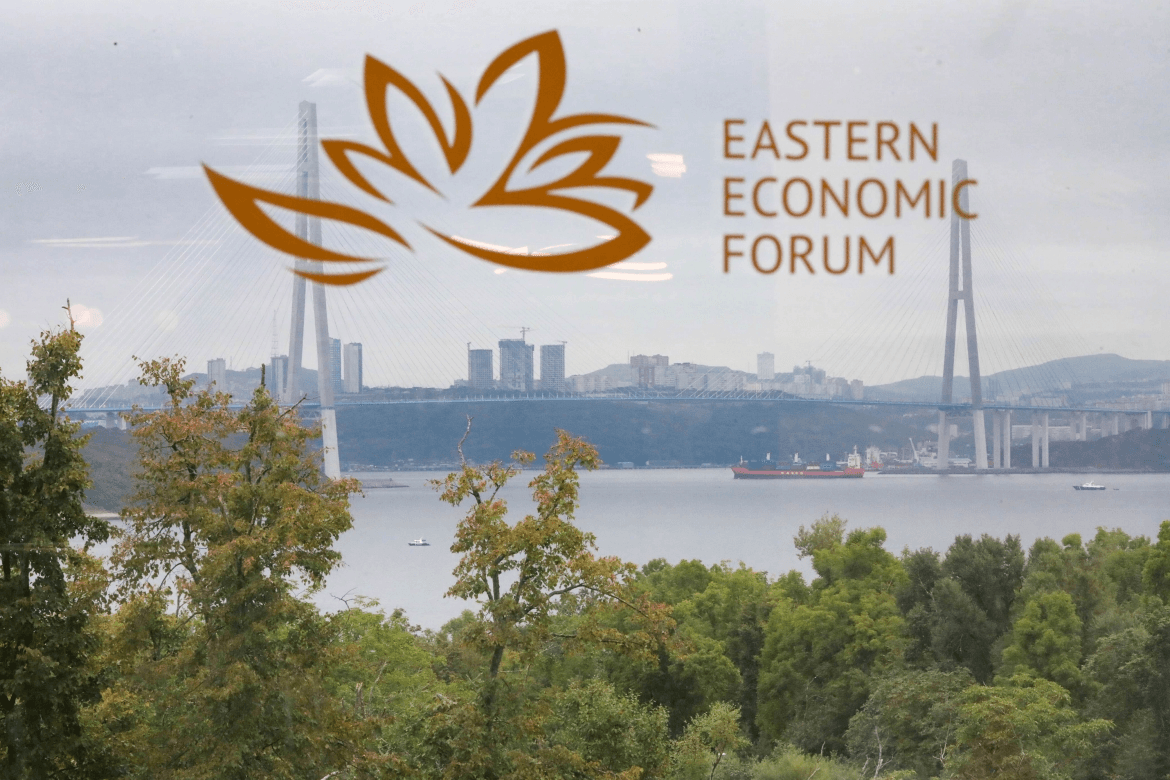
The 11th Eastern Economic Forum (EEF) in 2026 will take place in Vladivostok, Russia, from September 1-9, with the theme "The Far East: Development for the Benefit of the People." This theme reflects a shift in Moscow's approach to the Far East's development strategy, moving beyond economic growth and attracting investment to improve the quality of life for its citizens through infrastructure improvements, job creation, urban development, and the application of modern technology. In his welcoming letter to EEF 2026, President Vladimir Putin reaffirmed this commitment and expressed his hope that the initiatives presented at the forum will soon be realized, creating new momentum for the region's development.
On its opening day, the EEF announced its agenda with over 70 discussion sessions across five major thematic groups. The content spans from urban development planning, housing construction, human resource training, addressing demographic issues, to mobilizing private capital, developing digital financial assets, and building an Eastern Financial Center. Besides investment and trade issues, this year's forum also differs in that it dedicates significant space to technology topics such as data centers, robotics, autonomous vehicles, digital transformation in public administration, as well as ensuring energy security and upgrading transportation infrastructure. This demonstrates a more comprehensive approach to the development of the Far East, where technology is seen as a key factor in creating long-term competitiveness.
Discussions on logistics also attracted considerable attention, addressing issues such as ensuring the delivery of goods to Russia's far north, expanding air connectivity, developing transport infrastructure, and enhancing energy self-sufficiency. These are all crucial factors for unlocking the long-term potential of the Far East region.
Beyond its economic agenda, the EEF maintains its identity as a forum for cultural exchange and people-to-people interaction. This year, the "Far East Street" exhibition space brings together 11 entities from the Russian Far Eastern Federal Districts, along with federal ministries and departments, showcasing investment projects, technological achievements, and initiatives to improve quality of life. In conjunction with the 2026 Year of Russian Solidarity, the exhibition also features the culture, crafts, cuisine , and traditional arts of the communities in the Far East.
The most anticipated highlight of the forum was the meeting on the development of the Far East region chaired by the host country's President Vladimir Putin, bilateral meetings with leaders of many countries, and especially the plenary session attended by Indonesian President Prabowo Subianto, Chinese Vice Premier Ding Xuexiang, and Prime Minister...
Mongolian General Nyam-Osoryn Uchral and Myanmar Vice President Nyo Saw. The attendance of numerous high-ranking leaders and businesspeople from Asian countries is clear evidence of the attractiveness of the Far East region geographically connecting Northeast Asia, Southeast Asia, and the Pacific Ocean shipping lanes, with the potential to become a crucial link in the global trade network.
Shaping a new model for economic dialogue
Beyond its organizational success, EEF 2026 continues to affirm its position as an annual meeting point for policymakers, businesses, and investors in the Asia-Pacific region. After 11 editions, the forum is no longer simply a place to promote investment in the Russian Far East, but is gradually shaping a new model of economic cooperation in which dialogue is closely linked to policy implementation and the realization of development projects.
This shift is clearly reflected in the orientation of EEF 2026. While in the initial phase the main goal was to attract capital and exploit the potential of the Far East region, the focus has now expanded to building a comprehensive development ecosystem where infrastructure, finance, technology, human resources, and quality of life are considered mutually supportive components. This approach reflects the new development trend of the world economy, where the competitiveness of a region is no longer determined solely by the scale of investment but also by its ability to create a living, working, and innovative environment attractive enough for businesses and high-quality human resources.
This also reflects an adaptation to the rapidly changing landscape of international economic cooperation. For many years, the success of a cooperation mechanism was often judged by the number of members, joint declarations, or the institutional framework established. However, in the face of challenges such as slowing growth, supply chain restructuring, energy transition, and digital transformation, that criterion is gradually giving way to a more substantive requirement: the ability to create concrete cooperation opportunities and deliver tangible economic benefits. This is what allows flexible dialogue platforms like the EEF to play a role, complementing traditional cooperation mechanisms that are subject to many institutional constraints and decision-making processes.
The results achieved reflect the effectiveness of this model. According to Russian Deputy Prime Minister and Presidential Envoy to the Far Eastern Federal District, Yuri Trutnev, nearly 3,000 investment projects with a total value of approximately 14 trillion rubles have been implemented in the Far Eastern region through the EEF; about 6.5 trillion rubles have been disbursed, more than 1,100 businesses have started operations, and over 180,000 new jobs have been created. These figures show that the EEF has now become a tool for promoting economic development with measurable results.
Compared to other regional cooperation mechanisms, the EEF has also forged its own unique identity. For example, unlike the Shanghai Cooperation Organization (SCO) an intergovernmental institution with an agenda encompassing security, politics, economics, and regional connectivity the EEF operates in a more pragmatic way, focusing on connecting governments with the business community and investors. The EEF's distinguishing feature lies not in building new cooperation frameworks, but in its ability to bridge the gap between policy and market, from idea to project, and from commitment to implementation. As a result, the EEF is increasingly transcending the scope of a regional development forum to become a crucial link in the Asia-Pacific economic cooperation network, alongside mechanisms such as APEC and the St. Petersburg International Economic Forum.
In the context of a global economy shifting from a model of extensive globalization to one based on mutual benefit and value chains, the role of the EEF in promoting cooperation becomes increasingly evident. The forum does not aim to form a new economic “bloc” or impose binding commitments, but rather opens up a flexible space for cooperation based on shared interests. This openness and pragmatism enable the EEF to continue expanding its appeal to partners in Asia, particularly Southeast Asia a region increasingly recognized as one of the key drivers of global economic growth.
It can be said that the greatest value of the EEF in 2026 lies not only in the agreements signed during the event but also in affirming a model of economic dialogue suitable for the new context. Focusing on substantive development and common interests is the key to a regional forum's widespread influence, thereby affirming its position as an influential economic touchpoint in the Asia-Pacific region.
Source: https://hanoimoi.vn/eef-2026-doi-thoai-vi-thinh-vuong-and-phat-trien-chung-1706128.html