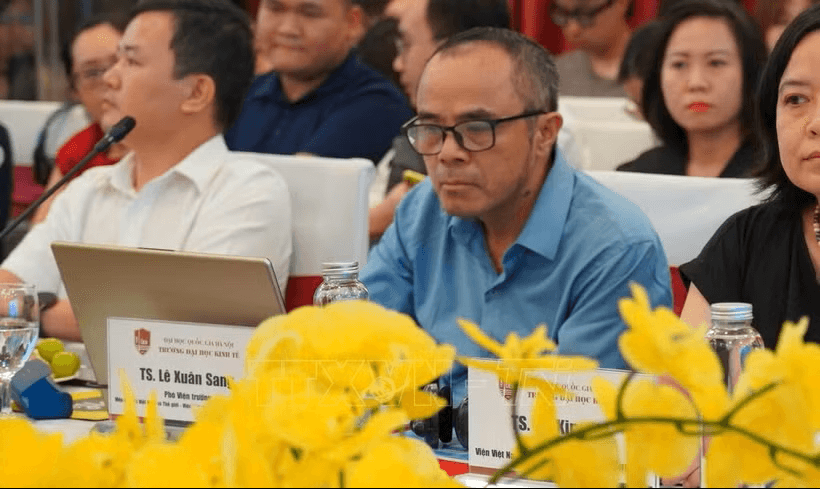
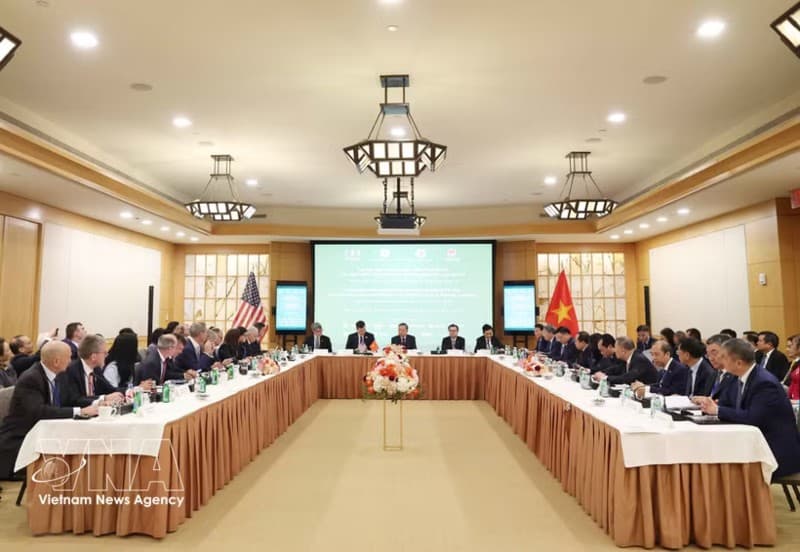
The conference brought together economists, diplomats, and researchers from both countries, including representatives of IESS, the Russian Academy of Sciences (RAS), FEFU, and the Vietnam Russia Joint Venture Bank (VRB), as well as former Vietnamese Ambassador to Russia Ngo Duc Manh. The event took place as the two countries work to implement the major priorities outlined in the May 2025 high-level Joint Statement and advance strategic cooperation for 2026 2030.
Shifting from Cost Optimization to Resilience and Strategic Autonomy
Opening the conference, Associate Professor Le Bo Linh, Director of IESS, emphasized the urgent need to review practical experience, translate high-level political commitments into concrete action programs, and resolve persistent structural barriers.
Echoing this view, Elena Sergeyevna Pyltsina of the Institute of China and Contemporary Asia, RAS, noted that the global economy is undergoing a fundamental shift from cost-driven globalization toward resilience, supply chain security, and strategic autonomy. Vietnam Russia economic cooperation therefore needs to extend beyond traditional trade in goods to strengthen technological autonomy and develop supply chains capable of withstanding geopolitical disruptions.
Identifying Key Bottlenecks
Participants identified several structural barriers constraining bilateral cooperation.
International payments and secondary sanctions risks: The disconnection of Russian banks from SWIFT, together with sanctions, has disrupted payment channels in US dollars and euros. Although bilateral payments in Vietnamese dong and Russian rubles through VRB are operational, liquidity and transaction capacity remain below the expectations of major businesses. The limited acceptance of Russian bank cards in Vietnam also creates difficulties for the nearly one million Russian tourist arrivals each year.
Logistics and multimodal transport: Reduced access to traditional maritime routes through Europe has placed considerable pressure on routes through the Russian Far East, particularly Vladivostok and Nakhodka, while insurance costs have risen. Transit infrastructure through third countries remains underutilized.
Modest trade volumes and delays in strategic projects: Bilateral trade remains at around US$5 billion annually, concentrated largely in raw materials and traditional oil and gas activities. Several major projects have faced delays because of sanctions-related and financing constraints, including the Long Phu 1 Thermal Power Plant and the Nuclear Science and Technology Research Centre project, which has been prolonged for nearly a decade.
FTA-related technical barriers: Several major Vietnamese exports, including textiles, footwear, and agricultural products, frequently reach the trigger levels for safeguard measures under the Vietnam Eurasian Economic Union Free Trade Agreement. Complex quarantine requirements and the lack of mutual recognition arrangements present further challenges.
Gaps in technology transfer and training: Cooperation lacks mechanisms for shared intellectual property ownership and matching funds for high-risk research and development to help innovations cross the “valley of death” into commercial production. Russia’s annual allocation of 1,000 scholarships has also yet to be fully aligned with priority technology sectors.
Five Pillars for Cooperation in 2026 2030
Drawing on a synthesis report prepared by experts from both countries and contributions at the conference, participants proposed a comprehensive approach built around five pillars.
1. Modernizing Financial Infrastructure, Digital Payments, and Risk Management
Proposals included expanding VND RUB liquidity through direct Nostro/Vostro account arrangements and strengthening VRB’s role as a key payment channel. Participants also called for greater use of digital payments by connecting VietQR infrastructure with major Russian banks, including Sberbank, VTB, and MTS Bank.
Other recommendations included exploring a regulatory sandbox between the two central banks for central bank digital currencies (CBDCs), the use of Russia’s System for Transfer of Financial Messages (SPFS), and opportunities offered by BRICS multilateral payment platforms.
2. Strengthening Logistics Networks and Multimodal Transport Corridors
Participants proposed expanding regular container shipping services linking Hai Phong and Ho Chi Minh City with Vladivostok and Nakhodka.
They also recommended studying road and rail transit through China and the deployment of specialized vessels for scheduled services along the Arctic Northern Sea Route (NSR).
3. Restructuring Trade and Expanding Manufacturing and Energy Cooperation
Recommendations included negotiating higher safeguard trigger levels under the Vietnam EAEU FTA and concluding mutual recognition agreements on sanitary and phytosanitary requirements.
Participants proposed moving from contract manufacturing toward localized production, positioning Vietnam as a manufacturing and supply hub for Russian technologies in Southeast Asia in sectors such as shipbuilding, mining machinery, and transport equipment.
They also highlighted opportunities to draw on Russian expertise in underground construction and metro systems, particularly in Moscow and Saint Petersburg, to support urban railway development in Hanoi and Ho Chi Minh City.
Energy cooperation could expand into liquefied natural gas (LNG), offshore wind, and green energy supporting net-zero goals, alongside renewed implementation of the Nuclear Science and Technology Research Centre project.
4. Advancing Science, Technology, and Training through the Triple Helix Model
Participants recommended aligning Russia’s 1,000 annual scholarships with priority fields such as semiconductors, nuclear technology, and artificial intelligence. Other proposals included industrial PhD programs and opportunities for Vietnamese students to undertake internships and part-time work at businesses in Russia.
They also proposed establishing a Vietnam Russia Innovation and Technology Transfer Fund, with matching public and business contributions at a 1:1 ratio, to finance proof-of-concept projects.
A network of joint laboratories in artificial intelligence, cybersecurity, and advanced materials was another priority.
5. Improving Coordination, Regional Linkages, and Performance Measurement
Participants proposed establishing a dedicated body for cooperation with Vietnam under the Office of the Presidential Plenipotentiary Envoy to Russia’s Far Eastern Federal District, alongside a “Vietnam Desk” in Vladivostok to provide one-stop administrative support.
They also recommended a three-tier framework of key performance indicators: enabling conditions, including the removal of regulatory and payment barriers; implementation, covering projects, transport routes, and joint ventures; and impact, measured through progress toward US$10 billion in bilateral trade, disbursed foreign direct investment, and the training of engineers in advanced technologies.
Turning Recommendations into Action
In their concluding remarks, Associate Professor Le Bo Linh and Marina Olegovna Dmitrieva, Deputy Director for Research and Innovation at FEFU’s Oriental Institute, commended the experts’ substantive and constructive contributions. The conference’s findings and recommendations will be consolidated into a policy advisory report for submission to senior leaders and relevant ministries and agencies in both countries.
The discussions underscored that the strength of the Vietnam Russia Comprehensive Strategic Partnership in the coming period will depend on political commitment, focused resources, and disciplined implementation of mutually beneficial priority projects. These efforts will be essential to delivering tangible added value and strengthening the long-term strategic autonomy of both countries.